
You Should Have More Secrets
Hold your tongue. Keep your soul. Against managed transparency

Somewhere along the way, honesty became a performance. Not the subtle, difficult performance, the one that costs you something, that you offer sparingly and with full knowledge of its weight, but the performance that arrives in Instagram captions and therapy-speak and the peculiar modern confession that begins “I just want to be real with you”, which is almost always the prelude to something that has been carefully curated to appear unedited.
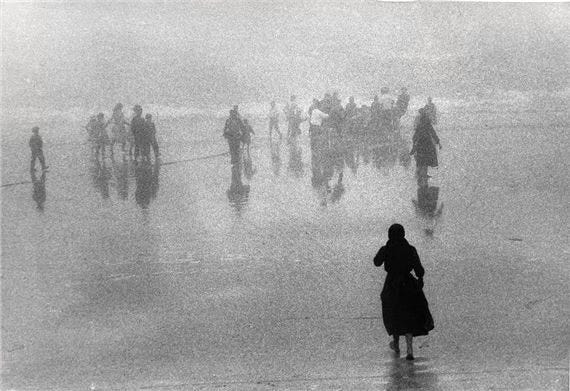
We did not become more honest. We became more disclosed.
These are not the same thing, and the confusion between them has done considerable damage to the self, to language, and to what we used to, without embarrassment, call the inner life.
The pressure to share everything, promptly, in accessible language, to an audience of varying intimacy is now so ambient that it barely registers as pressure. It registers as health. As authenticity. As the responsible management of one’s psychological interior, which must be ventilated regularly lest it become toxic, the way a room must be aired out, or it breeds mould. This metaphor, which underlies almost all of contemporary confessional culture, is worth examining for a moment because what it assumes is that the interior life is essentially domestic: a space to be kept tidy, aired, organised, made habitable for others. The question of whether the interior life is “yours”, whether it might exist for reasons other than being shared, whether its value might be precisely in its résistance to circulation… this question has been discreetly retired.
I want to bring it back, without being nostalgic, because I do have an argument.
The rehabilitation of secrecy has a poor public image, partly because secrecy is so often conflated with shame, and shame with something that ought to be overcome.
The logic runs: if you hide something, you hide it because you believe it to be wrong or deficient, and if you believe it to be wrong or deficient, you should either change it or, better, expose it to the disinfectant of communal recognition, whereupon it will lose its power over you. This is the therapeutic model, roughly, and it has real applications in genuine clinical contexts. What has happened, however, is that it has escaped those contexts entirely and colonised ordinary life, so that secrecy itself, not shame, not pathology, but the simple maintenance of an interior life that is not fully available to others, has become suspect. It has become, in the moral vocabulary of the moment, a form of emotional unavailability, which is now one of the more serious social offences a person can commit.
The self that withholds is now the damaged self, almost by definition.
But consider, for a moment, what secrecy actually does, again, not in the clinical case, not in the case of the person hiding abuse or deception, but in the ordinary, uncelebrated case of the person who simply does not say everything, who keeps certain thoughts in a register that is not public, who maintains, without guilt and without drama, a layer of inner life that is truly theirs, not performed for an audience, not processed into narrative, not translated into the shareable currency of feeling.
What that person has is not repression. What they have is form. A self with an inside and an outside, which is, I want to be careful here, not a self that is divided, but a self that is intact. Intactness requires boundary. This is not a metaphor. It is almost anatomical.
Georg Simmel, writing in 1906 on the sociology of secrecy, observed that the secret is one of the great achievements of the human species, the means by which the individual acquires an autonomous existence over and against the collective. Before Freud had finished inventing the unconscious, Simmel was already arguing that the capacity to conceal is constitutive of the self, not a deformation of it. That without the capacity to have an inside, you do not have a self in any meaningful sense. You have a surface.
This argument has been almost entirely suppressed in contemporary culture, and its suppression has been achieved through vocabulary, and not argument. We no longer have the language to describe productive secrecy without it sounding like either evasion or pathology. We have “oversharing” as a term of mild reproach and “authentic vulnerability” as a term of high praise, and nothing – no widely shared, accessible phrase – for the person who is fully present with others and fully private with themselves simultaneously, who withholds from discernment, not because they are damaged.
We need one! Badly!
And yet the absence of that word, that concept, is not accidental. Cultures do not lose vocabulary by oversight. They lose it because someone, somewhere, decided the thing it named was no longer useful to circulate. The self that cannot be read cannot be sold to, cannot be managed, cannot be efficiently categorised by the therapeutic, corporate, algorithmic systems that depend on your interior being, above all else, accessible. Opacity is not merely unfashionable. It is, in the most literal sense, bad for business.
There is also something worth saying about what full disclosure does to the person doing the disclosing, which is the part the confessional culture never quite gets around to examining. Every act of articulation is also an act of reduction. You take something that exists in you in its full, unresolved, pre-linguistic complexity, a grief, a desire, a suspicion about your own character that you have been circling for years, and you press it into the shape that language allows, which is always smaller than the thing itself. Share it, and you have not only reduced it; you have handed the reduced version to others, who will now reflect it back to you in their own terms, and over time that reflected, compressed version begins to replace the original. You lose access to the thing itself.
What confessional culture calls “processing” is sometimes, if you look at it honestly, a sophisticated form of disposal.
What follows is where the argument stops being comfortable.