
The Problem with Finding Yourself
Why the search was the wrong idea from the start

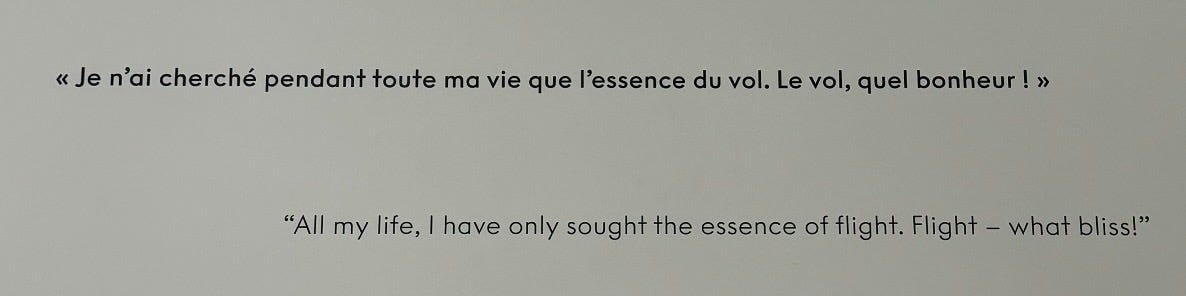
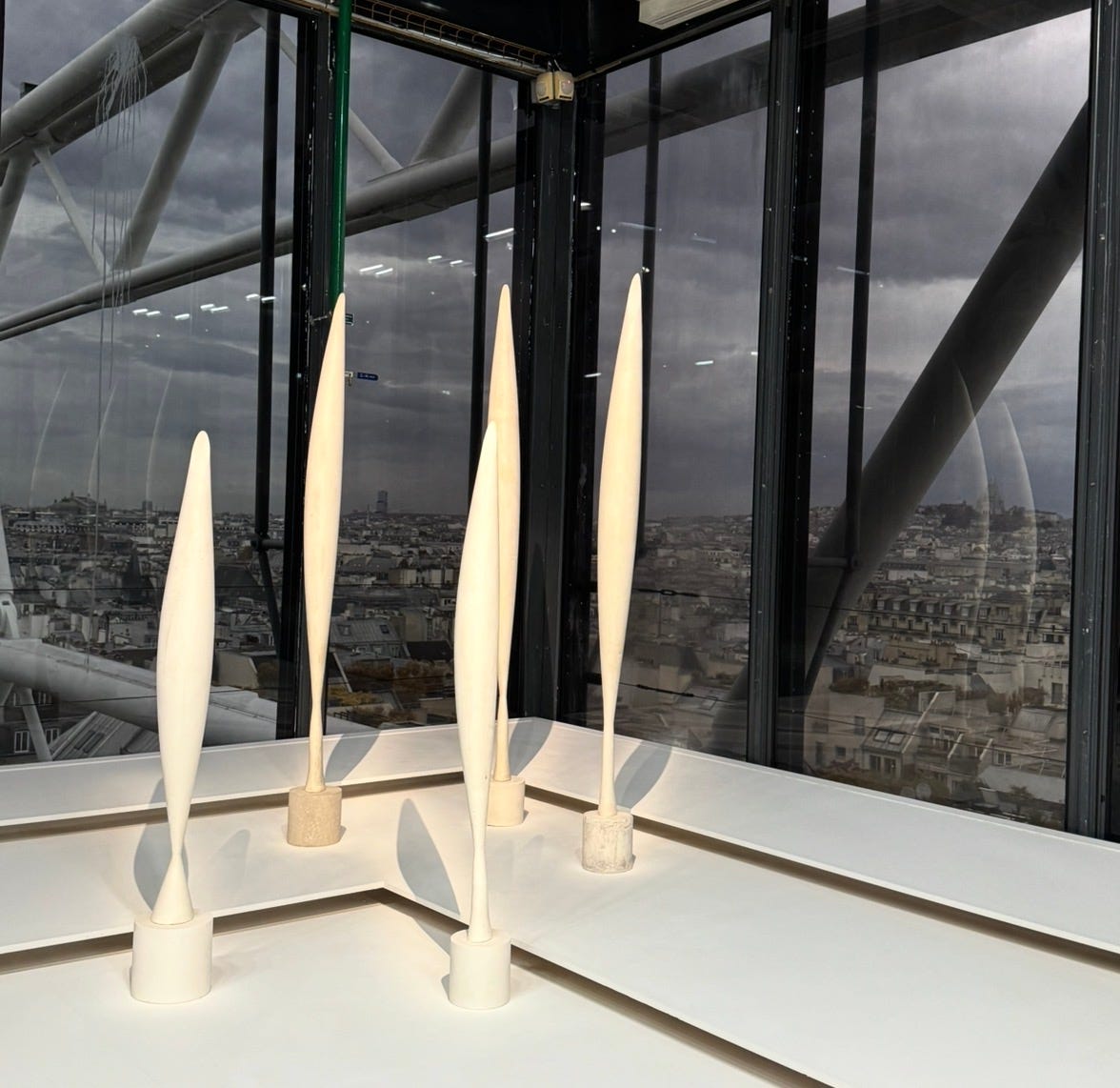
There is a room beside the Pompidou that most people hurry past on their way to something with a bigger queue, the reconstructed studio where Brâncuși worked, and the first time I stood in it, in 1997, I was unprepared for how many birds there were. Not one Bird in Space. Several. The same upward swerve of polished bronze, made and remade across the years, each version a fraction nearer to whatever the man was chasing and not one of them willing to call itself the last word. Plaster still ghosting the corners. Brâncuși did not stroll one morning and discover the bird lying ready inside a block of marble like the prize at the bottom of a cereal packet. He got to it the long way, by looking, by repeating the same gesture until his hands knew it better than he did, by refusing to be interested in much else for the better part of thirty years.
I think about that studio whenever someone tells me they are going away to find themselves.


A few weeks ago, between the cheese and the regret, one of my friends announced over dinner that she was leaving to do exactly that... find herself. Matera, in Italy, this time. The week before it had been Goa, all the way in India, and I suspected the destination mattered less than the verb, which was doing all the spiritual heavy lifting while the rest of the sentence sat there looking pleased with itself. To find. Consider the company that word keeps. You find your keys behind the bread bin. You find a fiver in the pocket of a coat you’d written off since March.
Finding assumes a thing that already exists, whole and waiting, mislaid through nothing worse than carelessness, recoverable if you only retrace your steps with enough patience and possibly a retreat. The whole grammar of self-discovery leans on this buried object, this small relic of the real you, lying under the silt of jobs and in-laws and unpaid parking fines and other people’s plans for your weekend, waiting to be dug up like a Roman coin out of a Norfolk field.
I don’t think it’s down there. I have looked. I did the journal phase, the long-walks-in-the-rain phase, the silent-retreat phase where a Belgian woman confiscates your phone into a wicker basket, and one regrettable fortnight that involved a man who introduced himself, with a straight face, as a facilitator of arrival.
No coin in the field.
And yet there is a great deal of money betting that there is. Walk through any airport and the bookshop will sell you the map to it, whole shelves of pastel spines promising that your authentic self is four small habits and one decluttered cupboard away. There are silly quizzes that assign you a number, as if the soul had a postcode. There is a confessional genre on the professional networking sites, the I-left-my-six-figure-job-to-find-myself post, which arrives without fail beside a photograph of the author looking pensive against some far-flung horizon and ends, always, with the unveiling of a coaching practice now taking clients.
The finding is rarely the product. The finding is the loss leader. What’s on sale is the search itself, renewable monthly, because a person who has truly arrived somewhere stops buying maps, and nobody in that trade can afford for you to arrive.
Where did we get the idea that there was a destination? Because it is an idea, with a birthday, and not a fact of the species. For most of recorded human time a person was the sum of where they stood. Daughter of, widow of, third son with no land coming to him, sworn to this guild and baptised in that parish, owing duties upward and downward in a chain nobody troubled to question. You knew who you were the way you knew your own street. Then somewhere around Rousseau the picture shifted, Charles Taylor has written about that shift with more patience than I can manage here, and the educated European began to suspect that beneath all the owing and belonging there sat an original self, unrepeatable, with its own true note to sound, and that the moral task of a life was to climb down and sound it. Even Montaigne, conscripted as patron saint of looking inward, didn’t think he was excavating a finished thing. He called the pieces “essais”, attempts, the self as a draft you keep revising and never get to call done.
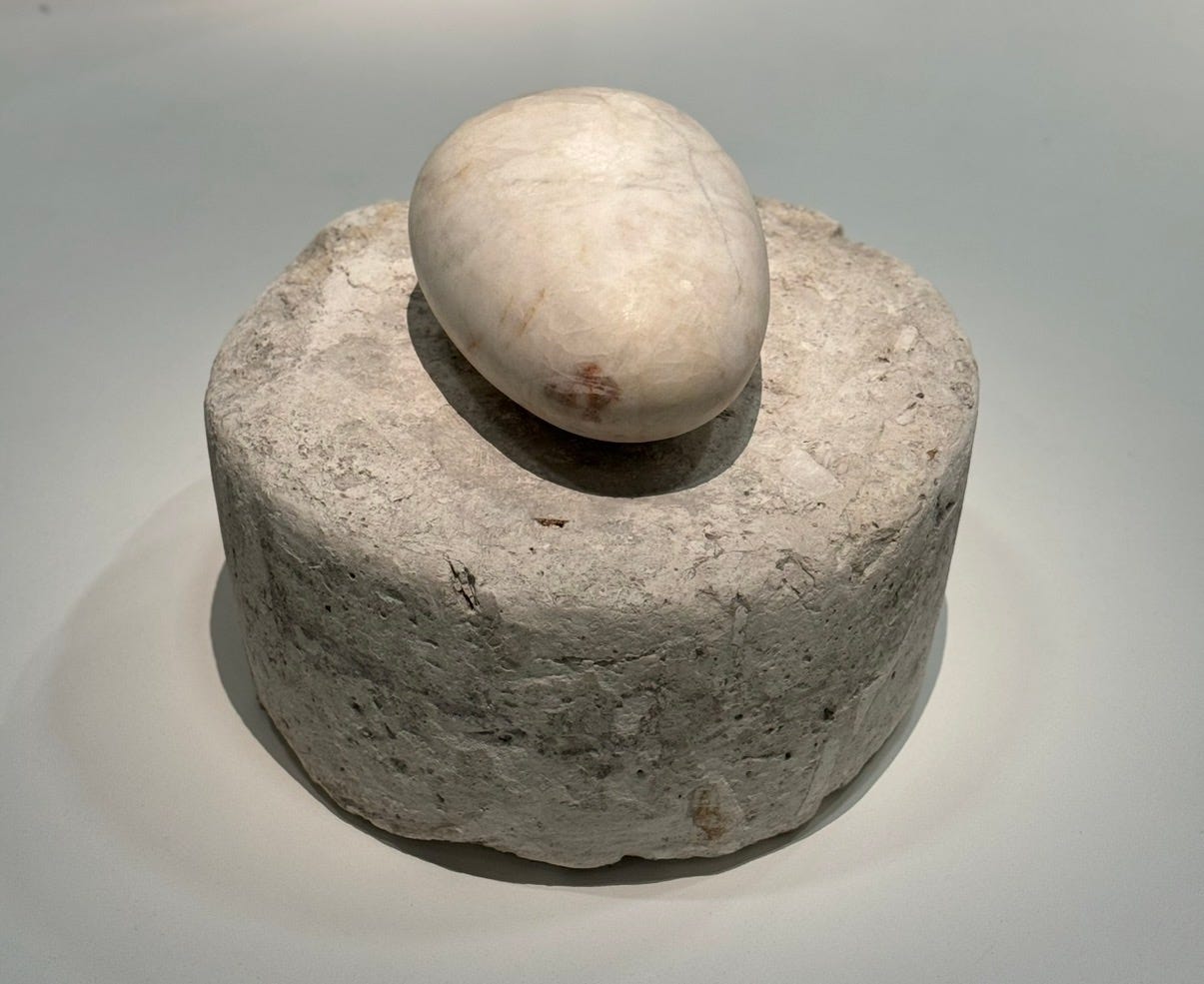
So let me try it from the other end, the Brâncuși end. I believe the self is not waiting anywhere. It is being made, now, this morning, while you read this, and the stuff it is made from is your attention. William James put it about as plainly as anyone has, in 1890. Millions of things press on the senses every instant and almost none of them enter our experience, because they don’t interest us, and what we call experience is simply the slice of the world we agree to attend to. Marcus Aurelius, scribbling to himself on campaign seventeen centuries earlier, had got somewhere similar and stranger, that the soul takes on the colour of whatever it dwells on and dyes itself in its own thoughts. Iris Murdoch built a whole ethics on the same hunch, the claim that being good is largely a matter of how clearly and how lovingly you manage to see what is actually in front of you, a real person, say, in place of the convenient cartoon of them you keep around to spare yourself the effort. And Iain McGilchrist keeps pressing a point that sounds mystical and turns out not to be, that the manner of your attention changes what is there to be attended to. Look at a tree as timber and timber is what shows up. Look at it as a living thing and something else does. The looking is never neutral. It does work, on the tree and on you.
Which is the whole of what Brâncuși was up to, polishing one swell of bronze for decades until it stopped being an object and turned into a manner of looking, set hard. He didn’t unearth the bird. He laid down attention, daily, the way other men lay bricks, and the bird accumulated. There is a marvellous footnote to this, which is that when one of those birds reached New York in the ‘20s the customs officers flatly refused to believe it was art and tried to tax it as a lump of industrial metal, and it took a courtroom to settle that the thing was a sculpture at all. Even the bird’s identity had to be argued into being, by people willing to look at it properly. Nothing about it was found.
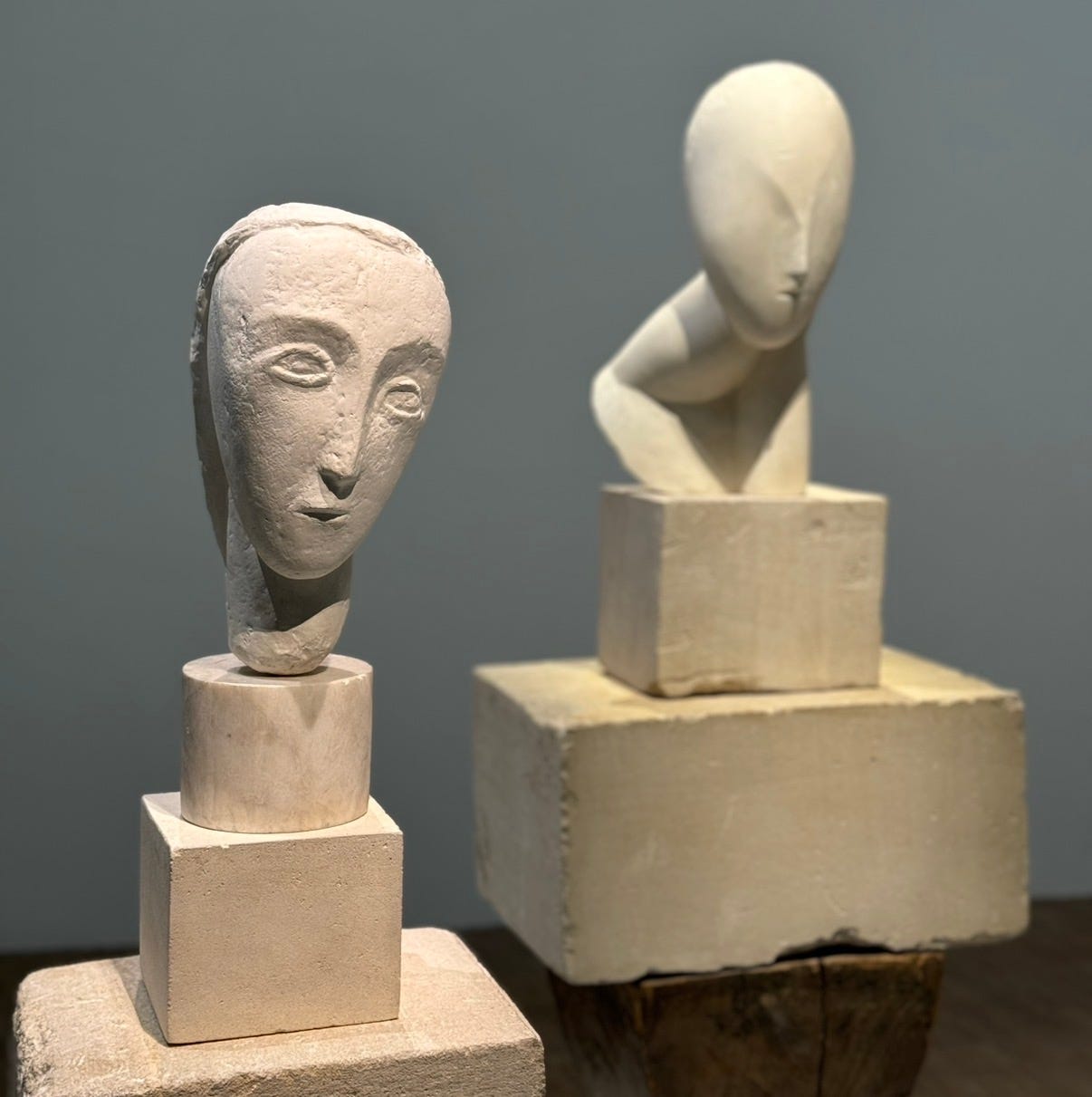
I knew this in my body before I could have argued it on paper. I trained as a dancer, years of it, cold afternoons at the barre, six days a week, watching the line of your own arm in the mirror until you ought to have been sick of it and somehow weren’t. You attend to a line ten thousand times. You attend to the half centimetre that turns a gesture from a shape into a sentence. And then one unremarkable day, long after you’ve stopped dancing, you are standing in a queue at the post office and you catch yourself reading the line of a stranger’s neck as she leans to sign for a parcel, and it lands on you that you never decided to become a person who sees the world as lines under tension. The attention decided. You handed it the hours, and it built somebody out of them while your back was turned.
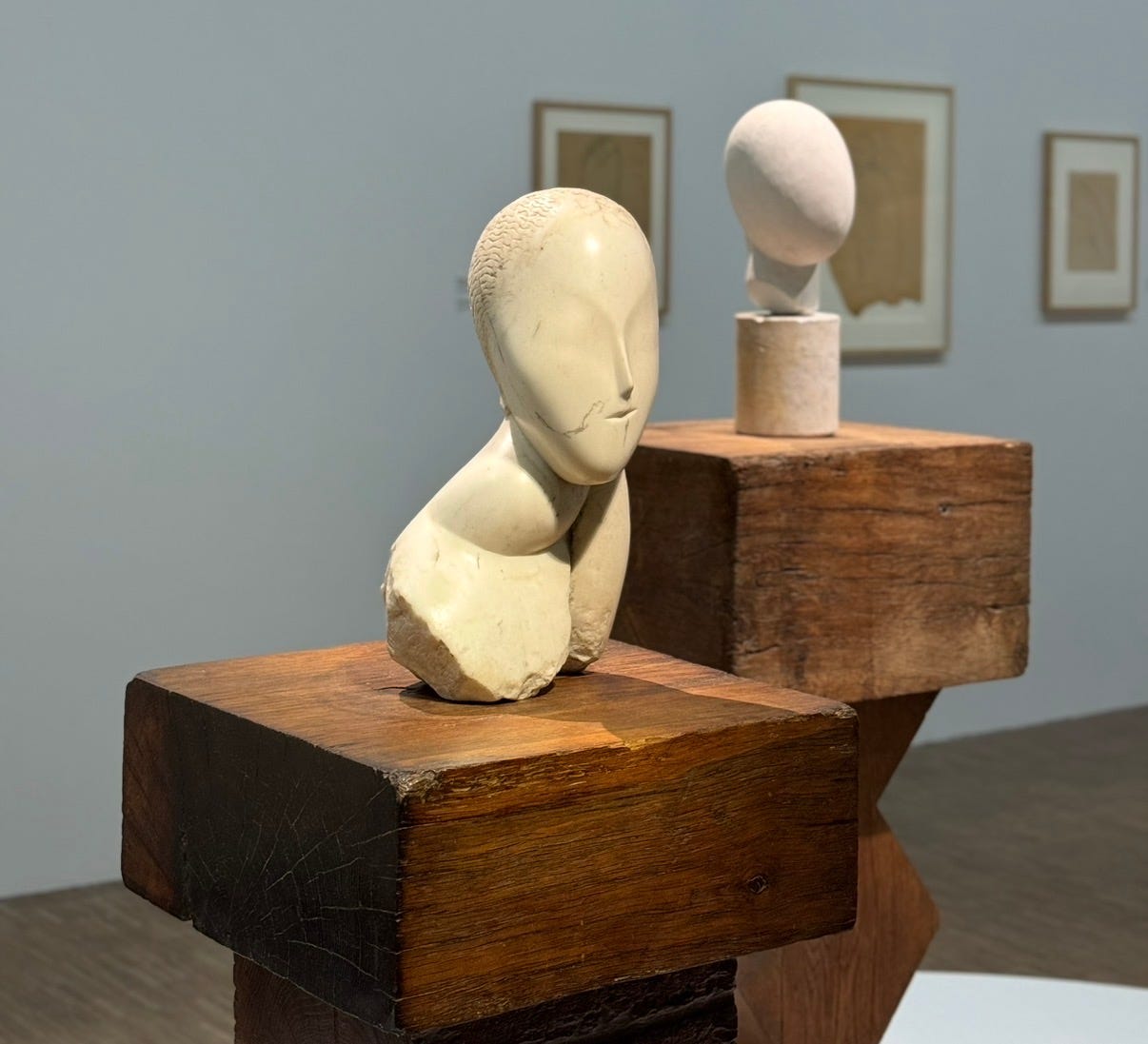
All of which would be rather lovely, a tidy scrap for a cushion, were it not for the detail that ruins the cushion. If you are made of whatever you attend to, then it becomes worth asking, fairly urgently, what currently has your attention. Be honest! Mine, on the bad days, is a glowing rectangle fifteen centimetres from my face that I consult somewhere between a hundred and two hundred times before lunch. There is a building in California full of people considerably cleverer than I am whose entire salaried purpose is to keep my eyes on that rectangle a few seconds longer because those seconds are the raw material they sell on.
So here I sit, writing high-minded sentences about Marcus Aurelius and the slow formation of a soul, while the actual sculptor of my actual self is a feed split-tested on me by strangers who would dislike me if we met. My friend flying to Matera has it backwards. The self she frets about was never the thing at risk. In her absence it is being made, very competently, by a recommendation system, and the plane ticket is only the part she has allowed to feel romantic about.
I watched it happen to someone, in slow motion, across about three years. A man I’d known as funny and a touch lazy and generous with his time and hopeless with a bill, who started, after a divorce that genuinely wasn’t his fault, attending mostly to the unfairness of it. Reasonable enough at first. You’d grant him the grievance. But the grievance was also what the internet kept handing him back, more of it, fresher outrages, and he attended to that the way I had once attended to the line of an arm, daily, with discipline, until the funny was gone and the man who passed me the gravy at Christmas had been assembled almost entirely out of what he had been reading, his own name left on him out of habit. He hadn’t found himself. He’d been made, and furnished, by what he kept clicking. Nobody flew anywhere.
And here is where I lose my nerve a little, because the obvious next move is to tell you to put the phone down, go and look at a real tree, take back the chisel, and I don’t fully believe my own sermon. I have tried. The phone wins most days. Willpower is a thin reed against an industry with quarterly targets. Cioran, who left Romania for Paris and then spent fifty years there declining, on principle, to find himself or to do much beyond writing gorgeously about the futility of trying, would have thought the Matera project obscene in its hopefulness. He would have called the self a wound you keep pressing to confirm it still hurts. Insufferable, and very likely right. The difference between him and Brâncuși, two exiles out of the same small and stubborn country, was never talent. It came down to where each agreed to aim his eyes, and Cioran kept his on the wound for fifty years and got a wound, beautifully described, while Brâncuși kept his on the bird and got the bird.
I don’t have a clean line to send you off with, and those who read me regularly know that I distrust the ones I keep grasping for. Some mornings, my kettle going and twenty minutes stolen before the rectangle gets me, I think about that studio beside the Centre Pompidou, the rows of birds, every one of them accumulated by hand across years, each a little nearer a shape the man never quite reached and went on reaching for anyway. There was never going to be a self waiting at the arrivals gate holding a card with my name spelled wrong. There is only the unglamorous and repeated question of what I let my eyes rest on today, and again tomorrow, and the slow heaping-up of all that looking into a someone I’ll sooner or later have to be. My friend came back from Matera, since you ask. Tanned. Much the same, only with a slightly worse relationship to the truth about where selves come from. I said nothing. You don’t, over dinner. You pour the wine and you watch the way she holds the glass, and you notice, because noticing is the one thing every last one of us is doing, all the time, bronze or no bronze, flight booked or not.
Written to you by someone who has given up looking for herself and settled instead for minding what she looks at, made and unmade daily by whatever I let hold my eyes, and so a slightly different correspondent than the one who began this essay,
Tamara
Not a tip jar. A ledger for what you underlined in your mind.
MUSEGUIDED exists because of its amazing readers.
If you want to be part of it, subscribe or upgrade, I would be glad and grateful to have you.


Tamara, this is exactly the theme you have a gift for choosing and then Museguiding far beyond the obvious. You take a familiar phrase and dismantle it until we realize we’ve been carrying around a metaphor that never made sense in the first place.
Attention may build a self, but it also edits one. We talk about what we look at, but rarely about what we no longer see. A photographer friend once told me that every photograph is an act of exclusion before it’s an act of inclusion. The frame matters because of everything left outside it. I think people are similar. At some point, I became convinced I was an impatient person. Then I noticed I’d been attending almost exclusively to deadlines, delays, queues, and inefficiencies for years. The evidence was overwhelming because I had curated it myself. The moment I started paying attention to moments that required patience, for instance a conversation with my grandfather, teaching a child to tie shoelaces, making a proper risotto, I discovered I was starving one version of myself and feeding another.
That’s why your Brâncuși metaphor is so perfect. We imagine identity as archaeology when it’s much closer to gardening. Nothing is buried waiting to be found. Things grow where attention is watered. Neglect is also a creative act.
And I laughed at the “facilitator of arrival”. If anyone ever introduces themselves to me that way, I’m immediately departing.
A beautiful essay, full of nuance, wit, and intellectual range. As usual, Tamara, you’ve taken a concept everyone thinks they understand and turned it a few degrees until an entirely different shape appears.
Imagine working 10 hours a day as a plumber for 20 years, but telling yourself in your mind that you're a surgeon because that's what you always wanted to be, and in your most delusional moments, still convince yourself that it's what you will pursue. At a dinner party, when a stranger asks you what you do, you would say that you're a plumber because to claim otherwise would be a lie at best, and insane at worst.
Seems obvious, except we tell this exact lie, and indulge this exact brand of delusion, whenever we talk about our identities; about "finding ourselves". The only difference is the abstraction of identity as a concept, which is so good at obfuscating the truth that we use it to soothe ourselves and to cope with uncertainty and disappointment.
And it is cope. To accept that it isn't who we are, but what we do that defines us, is to face the fact that our current state of dissatisfaction - and to be clear, we're all dissatisfied fundamentally despite what we tell ourselves and others - is in fact indistinguishable from who we are. It's not the totality of who you are, necessarily, but it is the culmination of all of your choices and experiences, combined with some impossibly encrypted genetic code.
The irony is that facing this devastating truth is the thing that might just be painful enough to get us to move, to change, to take steps to become the person we delude ourselves into thinking we are. But because the pleasure of a rehearsed dream often wins over the prospect of vacillating between the tedium and terror of real change, we book trips, buy consultations and consume products to find, not ourselves, but refuge from the pain of truly owning the sum total of our accrued calamities.
Devastating, Tamara, so naturally I love it.