
Off the Record
The dignity of being too much and the permission nobody else can give you

“The privilege of a lifetime is to become who you truly are.” – Jung
A part of this essay is paywalled because, after a certain point, it stops being philosophy and becomes practice, and that requires a different kind of witness. What follows the free section is not abstract theory about embarrassment but a genuine attempt to live differently inside it: the political asymmetries, the intellectual debts, the personal experiments in tolerating visibility, the slow renegotiation of a self that was partly assembled by other people’s expectations. This writing asks something of the reader too. I want it to reach people who arrive with curiosity and patience, not those passing through. My paywall is not a barrier, it is a room with a smaller door, one I open for readers who have chosen, deliberately, to be here.
Nobody has ever died of embarrassment, which is strange, given how convincingly it mimics the experience.
The body knows before the mind catches up. Something tightens. The skin recalibrates. Dignity, it turns out, is not abstract, it is a physical sensation, and it is possible to feel it drop. No markets collapse when this happens. No constitutions are rewritten. And yet, in the internal hierarchy of feared experiences, embarrassment ranks somewhere between heartbreak and mild public humiliation involving a microphone that stays on longer than expected. Why should such a small, fleeting moment of awkwardness possess this strange power to rearrange entire lives?
Because embarrassment is more than a simple emotion. It is a training programme. And unlike most training programmes, you don’t remember enrolling.
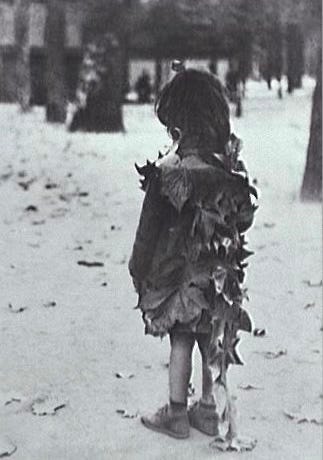
From childhood onward, most of us are gently, relentlessly coached into a choreography of acceptable selfhood. Speak softly! Sit properly! Laugh at the appropriate volume! Do not want too visibly! Do not enjoy too loudly! Do not wear the thing that will make your aunt pause mid-conversation and tilt her head in that specific way that means she is composing a comment she will deliver three days later over the phone to your mother! A thousand small instructions accumulate until behaviour becomes second nature and authenticity becomes something you negotiate rather than inhabit.
I sometimes wonder whether what we call “good manners” is partially a long-term strategy of emotional camouflage, civilisation’s way of keeping the more inconvenient parts of us filed neatly out of view.
This is not an attack on civility. I am a devoted admirer of elegance, of cultivated restraint, of the exquisite social ballet that allows strangers to coexist without constant friction. But somewhere between refinement and repression, a line gets crossed, and many of us cross it so early and so often that we mistake the crossing for character.
Religions understood this dynamic long before psychology formalised it. Across traditions, shame functions as a subtle social adhesive, discouraging behaviours that might destabilise communal norms. Cover this! Lower that! Redirect desire into approved channels! Even when framed as moral guidance, these instructions shape the body’s relationship with visibility. You learn to monitor yourself before others need to. The surveillance gets outsourced inward, and then, crucially, you forget you’re the one running it.
Michel Foucault wrote extensively about this mechanism: the way external authority gradually migrates inward until the individual becomes both subject and overseer. Embarrassment is one of its most intimate instruments. No policeman required. You carry the watchtower inside.
The script was assembled long before you arrived, and assembled by committee, which explains the inconsistencies.
Family gestures layered over inherited anxieties, school corridors echoing with lessons far more behavioural than academic, religious whispers that linger even after belief dissolves like smoke that outlasts the fire. Class markers disguised as taste. Aesthetic codes pretending to be morality. You inherit not only language and customs but permissible ranges of self-expression, a bandwidth of acceptable selfhood, outside which the signal degrades into noise.
What fascinates me is how rarely this inheritance is experienced as inheritance. It feels like personality. Preference. Natural inclination. The water one swims in, mistaken for one’s own nature.
Consider posture. There is a way of sitting that communicates composure, an angle of laughter that signals sophistication, a calibrated enthusiasm that appears warm yet controlled. None of this is accidental, and none of it is morally neutral. Pierre Bourdieu wrote about habitus, the embodied memory of social structures, history turned into second nature, deposited in the body so thoroughly that it need not be thought to be enacted. You do not consciously decide how to hold your fork at a formal dinner; the body remembers the class grammar that shaped it. Embarrassment emerges when that grammar falters, when gesture slips out of alignment with expectation. You feel “out of place”. And place is not inherently fixed, but embodiment carries historical residue that nobody warned you about when you acquired it.
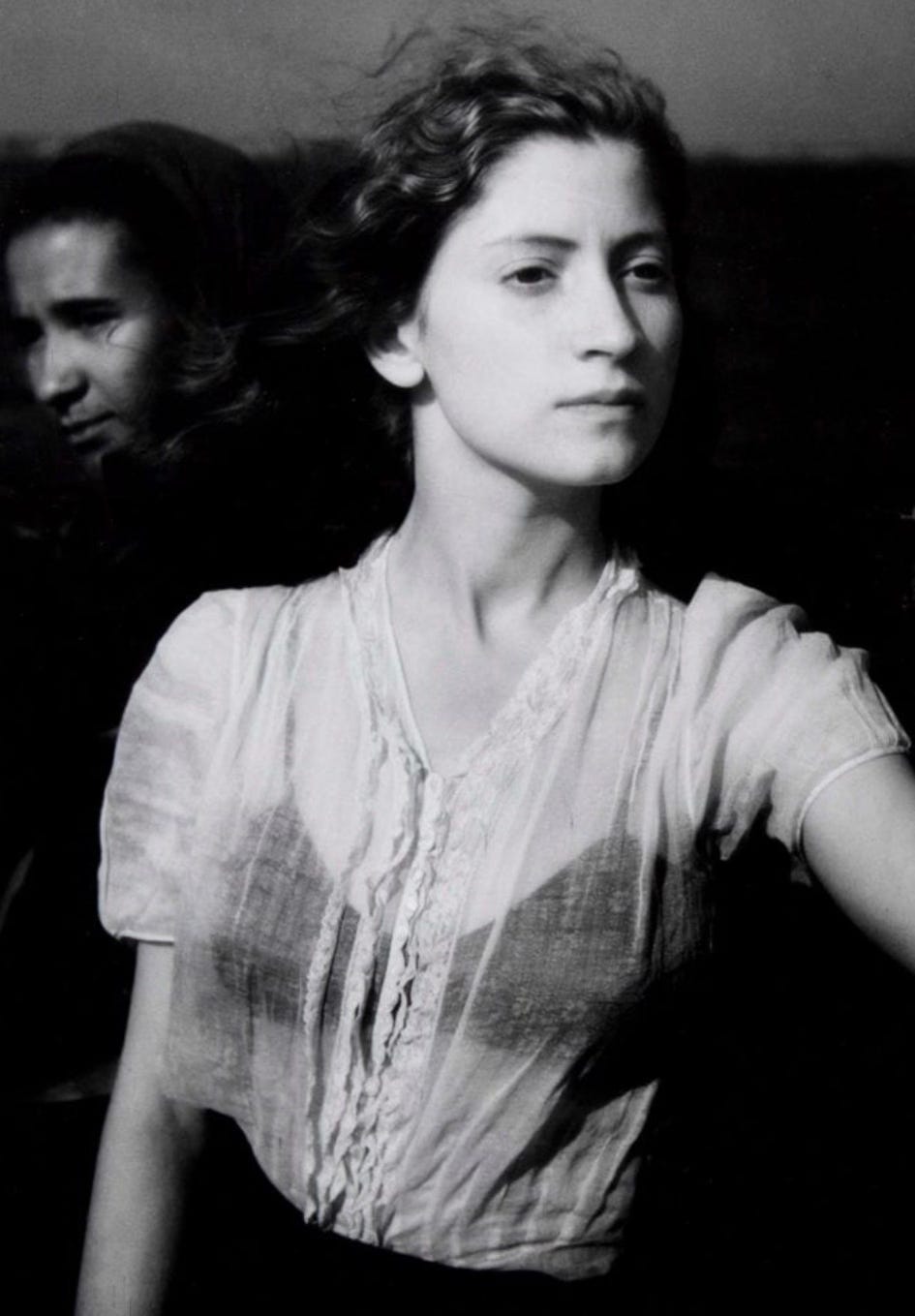
Religious traditions intensify this through the moralisation of visibility, a move so elegant it has operated across centuries and continents. Modesty, humility, propriety… virtues that have nourished communities and constrained individuals in equal measure, often simultaneously, in the same person, on the same afternoon. To be seen too vividly risks vanity. To desire too openly risks excess. The body becomes a site of spiritual management. Even secular societies retain these echoes, repackaged as taste or professionalism or that particular facial expression people make when someone in a meeting is being “a lot”.
The corporate meeting room is not so different from the chapel in its choreography of self-presentation. Both require a performance of interiority (calm, measured, appropriately humble, modest) that has very little to do with what is actually occurring inside anyone present.
Observe the micro-behaviours: tone moderated, jokes pre-filtered, clothing selected to avoid distraction rather than produce delight. Again, nothing inherently wrong. Social cooperation requires some mutual predictability. But over time, this continuous micro-editing accumulates into an internalised reluctance to reveal any impulse that does not fit institutional aesthetics. Embarrassment becomes the body’s enforcement mechanism, and the remarkable thing is how willingly we enforce it on ourselves. Kafka would have appreciated the efficiency.
Then digital life amplifies everything and adds an audience!
A writer I admire, Andrew of The Thin Veneer, made a distinction that I have not been able to shake: the difference between being watched and being seen. His essay on The Parasocial Panopticon argues that the algorithmic gaze doesn’t merely surveil, it reduces! It compresses interiority into legible metrics: likes, shares, swipes, watch time. In doing so, it replaces the complexity of a person with a preference profile, substituting curiosity with conformity, selfhood with signal. Surveillance culture watches us, but it also teaches us how to watch ourselves. And that recursive loop – you, observing yourself being observed, adjusting accordingly – is the true sophistication of the modern panopticon. Foucault meets the ring light.
And this is where the frame of embarrassment gets stranger, more fascinating, and I promise, more liberating than you might expect. Because what comes next is not a self-help prescription or a manifesto for insane oversharing. It is something more subtle: a renegotiation of the agreement you never consciously signed. The one that has been deciding, on your behalf, how much of you is acceptable.